


A Message from Dr. David Nelson
Between sports, clubs, church, and schoolwork, our students' schedules fill up fast. That's a good problem to have — it means they're active and engaged. But it also means balance doesn't happen by accident. It has to be taught.
Take a look at the week ahead — together.
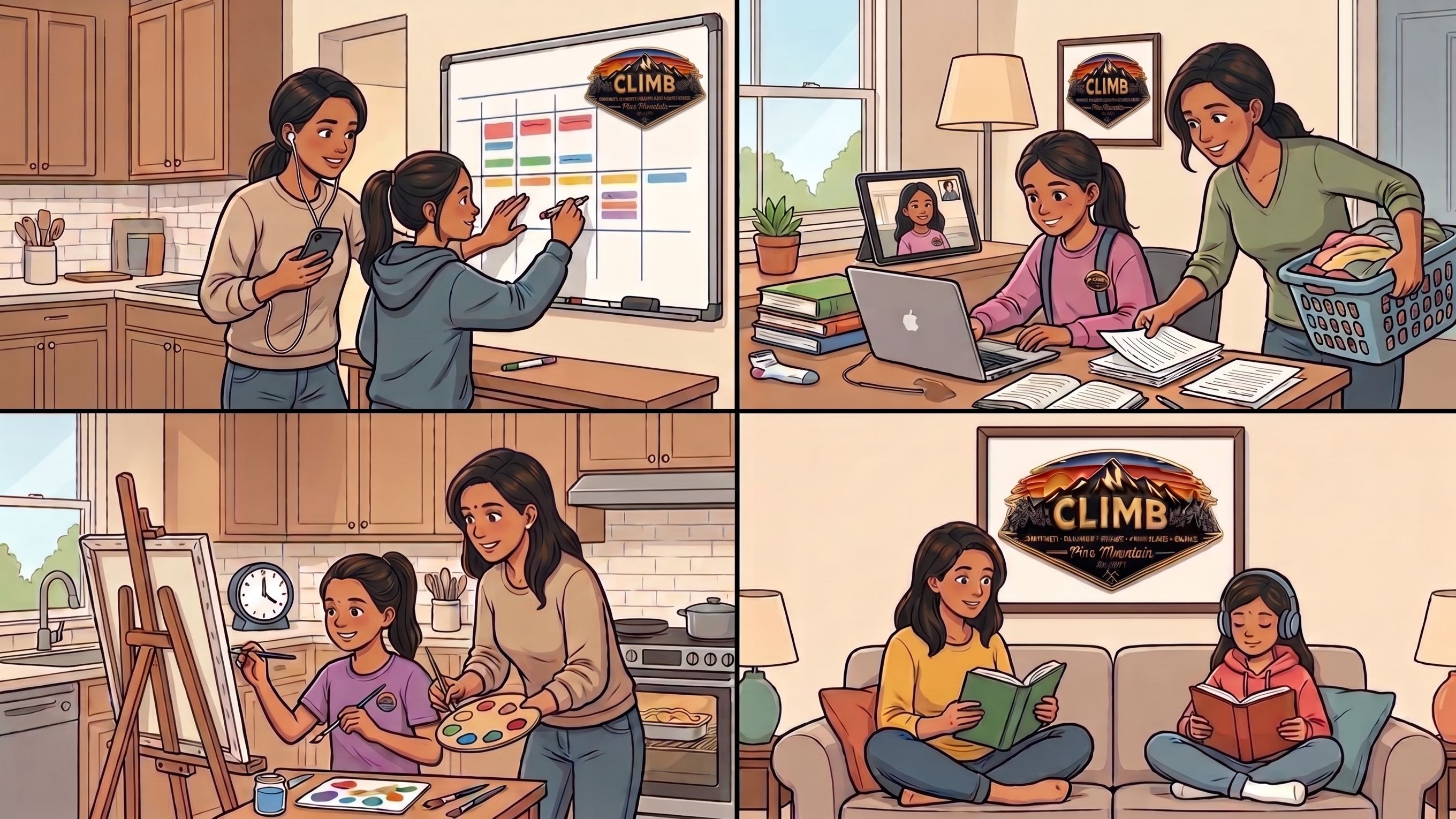
One of the most useful things a parent can do is sit down with their student and look at what's coming up: this week and next weekend. What tests or projects are due? What's the game or practice schedule? When you see it all in one place, you can catch the collision before it happens — instead of realizing at 9 PM on a Thursday that a big project is due tomorrow and cheer practice ran until 7.
Identify the "big rocks" early.
There's an old idea about filling a jar: if you put the sand and gravel in first, the big rocks won't fit. But if you put the big rocks in first, everything else fits around them. It works the same way with a student's week. The big rocks are the things that matter most — time with family, faith commitments, the test to study for, the essay that's due, the project that takes three nights, not three hours. If students only plan around practice and games, the big rocks get squeezed out — or skipped entirely.
Helping your student spot those big rocks a few days out, not the night before, is one of the most valuable habits you can build together.
Sports and activities don't replace responsibilities at home.
It's easy for chores to slide when a student's schedule is packed. But things like unloading the dishwasher, taking out the trash, doing laundry, vacuuming, or keeping their room picked up aren't just chores — they're part of the same balancing act. A student who learns to manage practice, homework, and responsibilities at home is building a skill that sports alone won't teach: how to carry more than one commitment at a time without dropping any of them.
This is a life skill, not just a school skill.
Time management, planning ahead, and knowing what actually matters this week — these aren't things students only need until graduation. They're the same skills they'll use at 30, 40, and 50: balancing a job with a family, a mortgage with a vacation, a promotion with staying present at home. The sooner students start practicing this, the more natural it becomes.
A simple shared calendar, a five-minute Sunday check-in, or just asking "what's your week look like?" can go a long way. You're not just helping them get through this week — you're helping them build a skill they'll use for the rest of their lives.